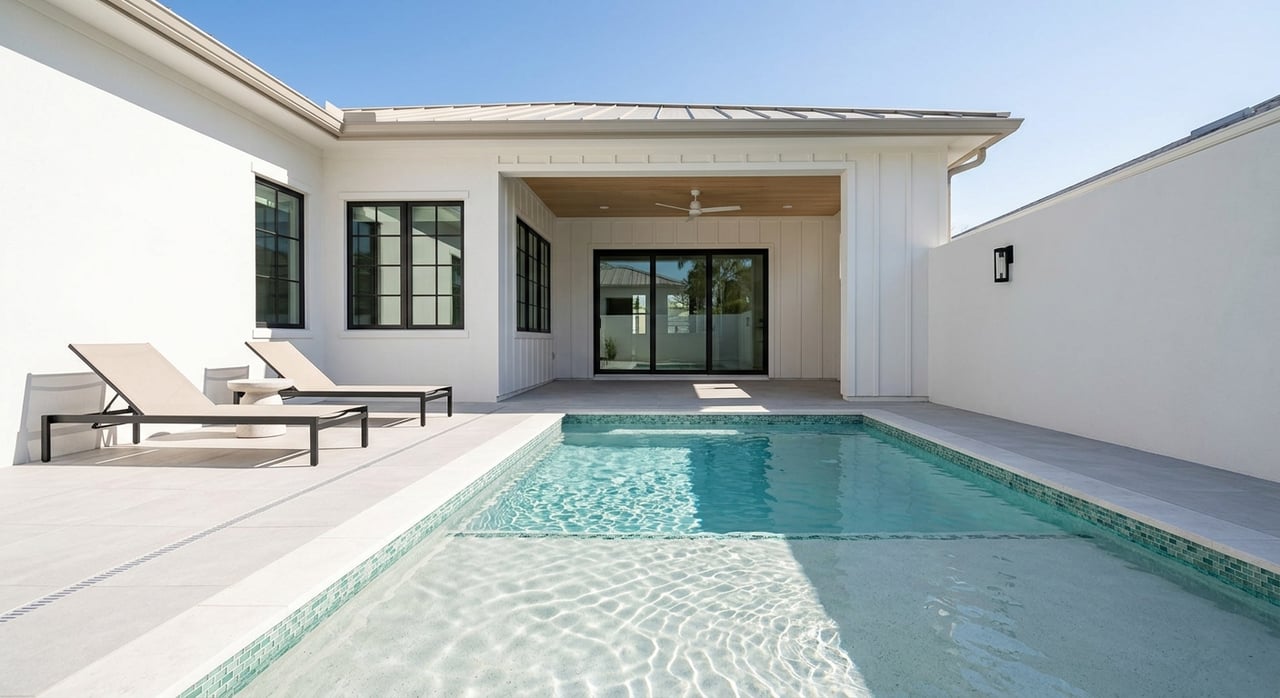
Your Guide to Buying a New Smyrna Beach Vacation Rental Home
April 2, 2026
April 2, 2026
Thinking about buying a vacation rental in New Smyrna Beach? It can be a smart lifestyle and investment move, but this is not a market where you want to guess your way through zoning, licensing, or coastal due diligence. If you want a property that works for both your goals and the local rules, you need a clear plan before you write an offer. Let’s dive in.
The most important question is not how cute the property looks online or even how close it is to the beach. It is whether you can legally use it as a short-term rental.
According to the City of New Smyrna Beach short-term rental brochure, stays of fewer than 30 days are only allowed in designated areas and zoning districts. The city notes specific areas east of the Intracoastal Waterway, east of the waterway and south of Third Avenue, and west of the Intracoastal Waterway, so parcel-level verification matters before you move forward.
If you are looking outside city limits in unincorporated Volusia County, the rules are different. The same city brochure explains that short-term rentals in unincorporated county areas are only permitted where zoning allows hotels or motels as a principal use. In other words, you should verify zoning for the exact parcel before you assume a home can operate as a vacation rental.
Two homes on the same street can have very different use rules depending on zoning and location. A listing description may mention rental potential, but your decision should be based on official verification, not marketing language.
That is especially true here because New Smyrna Beach is not a one-size-fits-all vacation rental market. The safest order is simple: verify legality first, then evaluate income potential.
Once a property appears eligible, the next step is understanding what licenses and registrations may apply. This is where many buyers mix up city and state requirements.
The city says any business owner must obtain a Business Tax Receipt before doing business in the city, and that receipt runs from October 1 through September 30 each year. Volusia County, however, repealed its countywide Business Tax Receipt requirement effective January 1, 2024, so buyers inside city limits should plan for the city BTR, not a county BTR.
At the state level, Florida DBPR licensing may also apply. The DBPR vacation rental guide says renting an entire unit more than three times in a calendar year for periods shorter than 30 days, or advertising it as a place regularly rented to guests, triggers the vacation rental licensing framework.
DBPR guidance shows that several property types can fit the vacation-rental model, including:
That gives you flexibility, but not every legal property type is equally easy to operate or market.
In a coastal market like New Smyrna Beach, location appeal and environmental risk often go hand in hand. A strong purchase decision should include more than projected rental income.
The city’s Flood Protection resources point buyers to FEMA Flood Insurance Rate Maps and explain that flood insurance can provide financial protection and peace of mind. Those maps identify special hazard areas and risk zones, which can affect both ownership costs and your long-term risk profile.
If the property is in one of the city’s historic districts, exterior changes may also require a Certificate of Appropriateness. That can matter if your business plan includes updates to improve guest appeal or durability.
If you plan to refresh the property before renting it, permitting should be part of your budget and timeline. The city notes it is enforcing the 2023 Florida Building Code and the 2020 National Electric Code, with permits submitted through Energov.
That means your improvement budget should include not just materials and labor, but also permitting, inspections, and time. For an investor, those details can affect your first-season launch date and total carrying costs.
New Smyrna Beach has real vacation-rental demand, but performance is not uniform across every property. Location, setup, and seasonality all play a role.
Third-party short-term rental data from Airbtics estimates New Smyrna Beach at 58% occupancy, a $229 average nightly rate, roughly $50,000 in annual revenue, and 1,245 active Airbnb listings as of March 12, 2026. Because this is scraped market data rather than an official local government report, it is best used as directional context rather than audited performance.
What it does show clearly is that this is a competitive market. Your purchase should be underwritten with room for variation based on property type, amenities, management quality, and marketing strategy.
Volusia County tax collection data suggests stronger winter and early spring demand than late spring. The county reported Southeast Volusia convention-development-tax collections of $380,249 in January 2025, $485,790 in March 2025, and $280,098 in May 2025, according to its January 2025 comparison report.
These figures are tax collections, not occupancy rates, so they do not tell the whole story. Still, they support a practical takeaway: you may see stronger seasonal demand in winter and early spring, with a different booking mix during shoulder seasons.
Local tourism content supports that pattern. Visit NSB highlights beach biking, fishing, and other outdoor activities for spring visitors, while local rental examples show daily, weekly, and off-season monthly options. That gives many buyers a useful target: a property that can appeal to both short-stay leisure guests and longer off-season visitors.
A property can be legal and still be a poor vacation-rental fit. In New Smyrna Beach, guest convenience appears to matter a lot.
Airbtics says bedroom count is usually the biggest driver of demand, followed by features like pools, views, outdoor space, hot tubs, kitchens, laundry, and parking. For many buyers, that makes practical sense. If you are comparing two similar properties, the one with easier guest logistics and more usable space may be easier to market.
Walkability also appears to help. Visit NSB highlights Flagler Avenue and the beachside corridor as major destination areas, reinforcing the value of a property that reduces friction between the unit, the beach, dining, and parking.
As you compare options, these traits may support stronger guest appeal:
This does not mean every successful property must check every box. It does mean the more seamless the guest experience feels, the easier your marketing story usually becomes.
Many first-time vacation-rental buyers focus on mortgage, taxes, and insurance. In reality, operating costs and compliance items can have a big impact on returns.
The DBPR guide lists a $50 application fee, a $10 hospitality education fee, and a $170 annual fee for a single rental unit, or $90 for a half-year fee. The same guide shows District 4, which includes Volusia County, with an annual renewal date of April 1.
DBPR also requires units to be kept clean, safe, and in good physical condition, with bedding and linens cleaned between guests or at least weekly. That means professional turnover cleaning and linen handling are not optional line items in most realistic operating models.
Volusia County says owners of rentals of six months or less are responsible for collecting and remitting a total of 12.5% tax, with 6% going to the county and 6.5% to the Florida Department of Revenue. You can review that on the county’s tourist and convention development tax FAQ page.
The Florida Department of Revenue framework also confirms the state sales-tax component for transient rentals. If you are underwriting a purchase, these taxes should be built into your model from day one.
Guest-facing costs can shape booking decisions too. Volusia County’s current beach driving and parking schedule charges visitors and unregistered residents $20 per day for off-beach parking and $30 per day for on-beach driving.
That may not change your ownership costs directly, but it can affect perceived convenience. If your property includes easier parking access or reduces the need for extra driving, that can become part of its appeal.
New Smyrna Beach is not a market where basic photos and a generic listing description are likely to stand out. If you want strong performance, presentation and distribution matter.
NSBAVB’s 2025-2026 strategic plan emphasizes sales and marketing, destination management, destination alignment, and digital infrastructure. Airbtics also notes that performance varies based in part on management style and marketing strategy.
For you as a buyer, the takeaway is clear. A polished vacation rental needs strong photography, smart pricing, channel management, and clear positioning in order to compete well in an active market.
If you are serious about buying a vacation rental home in New Smyrna Beach, the smartest approach is to move in the right order. This helps you avoid falling in love with a property that does not fit your goals or the rules.
Use this sequence as your baseline:
The strongest fit is often a beachside condo or home with convenient access, solid parking, and flexibility for both peak-season guests and off-season stays.
If you are weighing a coastal purchase and want a more strategic lens on value, usability, and long-term positioning, Abby Greenberg can help you think through the details with a curated, data-informed approach.
Stay up to date on the latest real estate trends.

Abby Greenberg and The A List team are just a call or click away. Our team is dedicated to helping you find the perfect solution to your real estate needs, with transparency and professionalism.