Maitland Art Center Expansion and What's Coming Next
August 20, 2026
August 20, 2026
Drive down West Packwood Avenue this year and you'll notice something that hasn't been true of this stretch of road in almost ninety years: a construction fence. It runs along the north edge of the Maitland Art Center, cutting across a patch of grass that has sat untouched since the compound's carved concrete walls first went up. If you've been to a wedding in the Mayan Courtyard, taken a six-week ceramics class, or wandered through on a free Last Wednesday evening, the fencing probably stopped you for a second. This campus does not get new buildings. That is, until now.
The easy story is that the Art Center is expanding, the way any popular local institution eventually does. The more interesting story, and the one the construction crews are actually building toward, is why nobody has added a single structure to this footprint since Jules André Smith finished it, and what it says about the place that they finally are.
Smith founded the site in 1937 as the Research Studio, an experimental artist colony funded by philanthropist Mary Curtis Bok. Over the years it hosted working artists including Ralston Crawford, Milton Avery, and Consuelo Kanaga, and Smith himself carved much of the Mayan-influenced concrete relief work that still covers the walls and courtyards. It's one of the few surviving examples of Mayan Revival architecture in the Southeast, sometimes called fantasy architecture, and it reads less like a museum campus and more like a stage set built for people who happened to also be artists.
The city of Maitland bought the property in 1969 to keep it from being demolished. In 2014 the National Park Service designated it a National Historic Landmark, one of only a handful in the Central Florida region. Since then the campus has run almost entirely on the buildings Smith left behind. Every class, every gallery show, every artist residency has had to fit inside studios designed for a much smaller, much different kind of use.
Danielle Thomas, executive director of Art & History Museums of Maitland, the nonprofit that runs the site, explained the constraint in plain terms to a local television crew last fall: the current ceramics classroom is small enough that the kilns can't be fired while students are in the room. That single limitation has quietly shaped the entire class schedule for years. Ceramics happens to be the museum's most popular class offering, and yet the building meant to teach it has never been able to run at full capacity, because the room doing the teaching is the same room doing the firing.
That is the kind of detail that doesn't show up in a press release but explains everything about why the campus needed to change. The historic studios were never built to be classrooms in the first place. They were built for individual working artists. Turning them into shared teaching space was a workaround, and workarounds eventually run out of room.
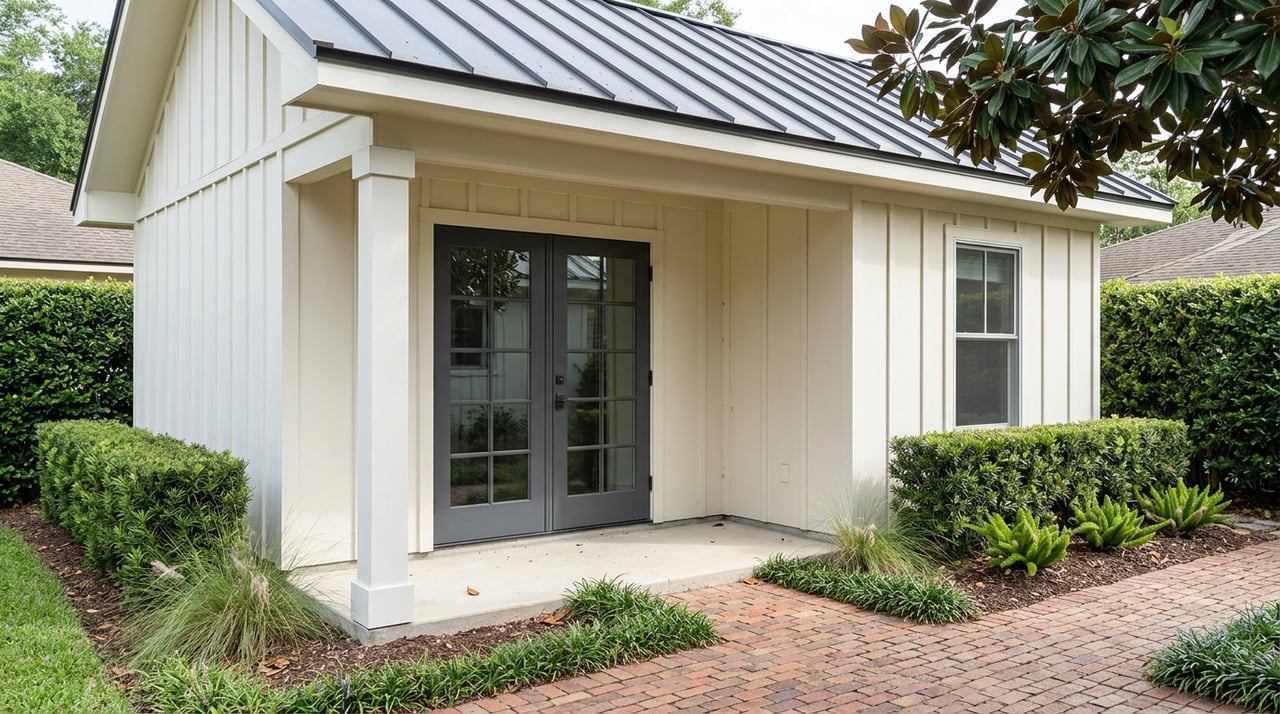
The city approved a project that adds two education buildings, roughly 6,000 square feet combined, on 1.26 acres along the campus's north side. Designed by the Orlando firm DLR Group, the buildings are expected to accommodate up to 500 students per semester once complete, a real jump from what the historic studios could ever handle. One building is dedicated to ceramics, with its own separate, better-vented firing room so kilns can run on a normal schedule instead of waiting for empty classrooms. The other holds flexible space for painting, drawing, and printmaking, along with a small permanent gallery.
"It's the start of a new era for the Maitland Art Center," Thomas told News 13. "We are feeling amazing now that this is actually happening. This has been a long time coming."
The buildings carry a name that matters as much as the square footage: the Que Throm and Cicero Greathouse Education Studios.
Que Throm and Cicero Greathouse were longtime supporters of the Art Center and accomplished artists in their own right, and their story is local in a way that a typical capital campaign rarely is. Greathouse had been Throm's student in high school. Decades later, when Throm was 60 and Greathouse was 45, the two married. Their estate is funding the bulk of the roughly $2.5 million construction cost, supplemented by a cultural facilities grant from Orange County and funds the museum had already set aside. The new gallery inside the classroom building will permanently display their work alongside pieces from current instructors and students.
It's worth sitting with what that funding structure means. This isn't a municipal bond project or a developer contribution tied to a nearby rezoning. It's two artists who spent their lives around this campus leaving behind the means to finally finish it.
Here is the part that changes how you should think about the fencing on Packwood Avenue. Once the new buildings open and classes move into them, the historic studios go back to something closer to their original job. Thomas and the museum's board plan to reinstate the Artist in Action residency program in the freed-up space, letting individual working artists use the same studios Smith designed for exactly that purpose in 1937.
The construction you're watching isn't really about giving ceramics students more class times, even though that's the visible headline. It's about undoing a nearly nine-decade compromise where the campus's founding purpose got quietly displaced by its more practical one. For most of its history, the Art Center has been a place where people take classes inside rooms built for someone else's residency. When the new studios open, that stops being necessary.
Construction began in late 2025, and the museum expects it to run roughly 10 months, putting the new classrooms on track to open sometime this fall. Until then, the fencing and the trenches along the north wall are the most visible sign of a project decades in the making. If you want to see the historic side of the campus while the new one takes shape:
None of that changes on account of the construction. The campus is still open, the classes are still running, and the fence is only around the empty lot where the new buildings are going up. What changes is what you're actually looking at when you walk past. It isn't an upgrade. It's a campus finishing the sentence its founder started in 1937.
If you're the kind of Maitland resident who already has opinions about which studio building has the best afternoon light, or you've been meaning to check out Last Wednesday and haven't gotten around to it yet, that curiosity is exactly what keeps a neighborhood worth paying attention to. The A List spends as much time tracking what's being built and preserved in Maitland as we do tracking home prices, because the two aren't as separate as people think. If a friend ever asks you what's actually happening in this pocket of Central Florida, or you find yourself wondering what your own place here is worth these days, we're a few blocks away and happy to talk.
Stay up to date on the latest real estate trends.

Abby Greenberg and The A List team are just a call or click away. Our team is dedicated to helping you find the perfect solution to your real estate needs, with transparency and professionalism.